
America at 250: A journey through time, told through our communities
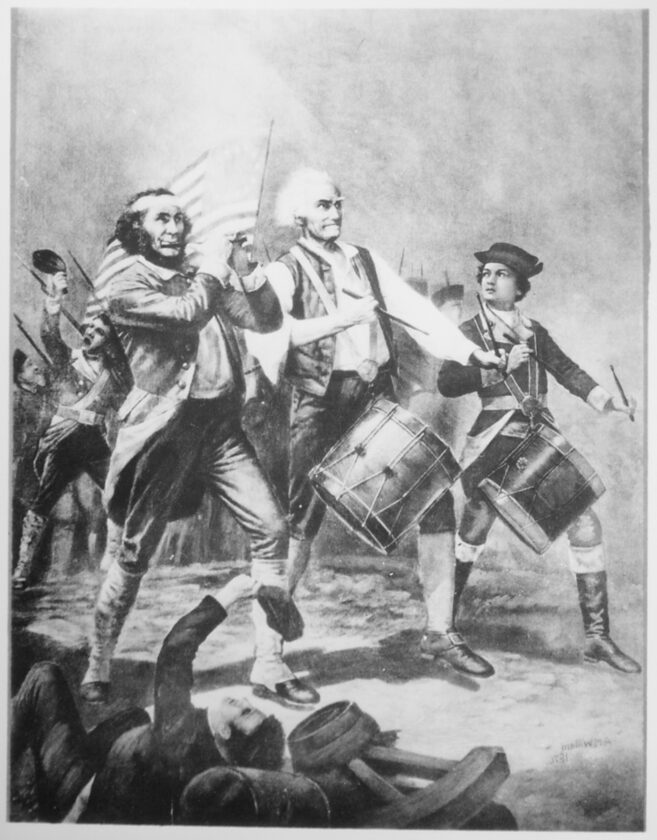
This copy of a painting by Archibald M. Willard is made available through the National Archives.
What began as an experiment in self-governance rooted in personal freedom and liberty has grown into the world’s most unique and important nation: the United States of America. Here, we can, within the boundaries of the law, do, say and think what we wish; we can worship as we choose; we have taxation with representation; the American Dream remains a real, living concept; and so much more. As President Ronald Reagan so aptly said in describing America’s exceptionalism, we remain, in the eyes of the rest of the world, that “shining city on a hill.”
But here at home, the mood has shifted in recent years. Too many of our friends and neighbors believe the American Dream — the idea that, through hard work, everyone can get ahead — no longer is attainable. We see our friends and family members protesting regularly over actions for which they do not agree.
But even that — the right to, without fear of reprisal, protest your government and its actions — is part of what makes America so unique.
This year marks a special milestone for our nation — and perhaps comes at just the right time to bring Americans together. On July 4, we will celebrate 250 years of America. What began as organized resistance to taxation without representation, unlawful searches and distant rule has become a nation that stretches from the Atlantic to the Pacific, a country shaped by many voices and backgrounds, a place where ideas and cultures converge into a great societal melting pot.
Two-hundred and fifty years. Think about that. This July 4 will mark 91,310 days of America. A quarter of a millennium. What started officially with the Second Continental Congress’ signing of the Declaration of Independence on July 4, 1776 and admitting the first 13 states has become a nation welcome to all — a nation that has been a beacon for the world as its longest-standing democracy.
As we look at America from its beginnings in 1776 to today, we see a nation that has grown through bold ideas, has been tested through conflict and expansion, and been sustained by generations that believed in its promises. We see a nation that leads the world in innovation. We see a nation that, through its natural resources, its geography and most importantly, its people, has emerged as the world’s leading superpower.
Let’s face it: when America’s sons and daughters put their mind to a task, it gets done.
To mark this anniversary, we will take readers on a journey through that 250-year-old story — not through distant accounts, but through the communities closest to home.
Beginning April (12th or 13th), our America 250 series will explore the nation’s origins, growth and continued transformation by tracing history through the very places our readers call home. From George Washington’s earliest days on the frontier helping Lord Fairfax survey the western front to the rise of industry, energy and agriculture, this series will highlight how our regions helped define the American experience.
We will begin where so much of that story took root: Washington’s early years in Winchester, Virginia. Long before he became the nation’s first president, Washington’s leadership came on the frontier, where Winchester served as a critical military corridor and staging ground during the French and Indian War and the Revolutionary era.
From there, we move to Frederick, Maryland, a vital hub of supply routes and troop movements that helped sustain the fight for independence. It was communities such as Frederick and others that helped sustain the war against the British monarchy.
The journey then shifts west, following the path of a young nation pushing beyond the Appalachian Mountains. In Washington and Uniontown, Pennsylvania, and into Wheeling, West Virginia, readers will see how the western frontier became a proving ground for expansion, settlement and new ideas about self-governance and opportunity.
Wheeling, West Virginia holds a unique place in that story. During the Civil War, it became the birthplace of West Virginia — the only state formed by separating from another in that conflict. It stands as a reminder that the nation’s history included difficult choices made in pursuit of its ideals.
As the series progresses into May and June, it will follow the country’s development through key moments and places — from early land surveys in the Northwest Territory to the founding of Marietta, Ohio. It will examine the National Road, which helped connect a growing nation, and later milestones like the transcontinental railroad, which, when the Golden Spike was driven in Utah in 1869, linked east and west.
The series also will highlight the rise of industrial centers such as Youngstown and Sandusky, Ohio, the energy resources that powered expansion, and the agricultural communities that continue to feed the country.
Each week this journey will bring history closer to home, illustrating that the places we live were not merely witnesses to history, but active participants in shaping it.
As the nation approaches this 250-year milestone, this series offers a chance to look back — and to consider what comes next. The American story is still unfolding, written every day in communities like our own. We hope you join us over the coming three months as our nation prepares for America’s 250th anniversary.
Local News
America at 250: A journey through time, told through our communities
East Liverpool PD swears in its new officer
Early voting starts Tuesday
LISBON — Early voting starts Tuesday at the Columbiana County Board of Elections, giving registered voters ...

Salem grad lending voice to choir fundraiser
Good Friday Cross Walk held in Wellsville
East Palestine residents will have the chance to consult with local home repair experts
HOME REPAIR FAIR AT A GLANCE WHAT: EPACT Home repair fair WHEN: 10 a.m. to 2 p.m. Saturday, April 18 WHERE: ...