
Retired teachers get a history lesson on charter schools in Ohio
Trending
LISBON -- The birth of charter schools in the late 1990s created a monster and that monster is becoming a ferocious creature, William Phillis of the Ohio Coalition for Equity and Adequacy of School Funding said Thursday.
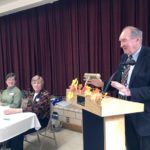
Phillis was the featured speaker for the Columbiana County Retired Teachers' Association meeting, which also celebrated the association's 50th year. Prior to taking the reins at the OCEASF, the Hanover Township native was superintendent of the Columbiana County Joint Vocational School and Education Service Center.
Phillis pulled no punches when he discussed the plight of public schools and state funding and their apparent rival for those dollars, saying that the state gave charter schools "free rein, no restraints and unlimited praise."
He also accused charter schools of finding ways to control all branches of government to further their growth.
He said state officials, through House Bill 2, were able to "slow the monster" through more accountability for performance, but believes it is "still running wild."
He did concede, however, that the original concept for charter schools may have been useful - to create a school within a school district that is free of some of the regulations and bureaucracy, paving the way for more creative and innovative practices - but the concept was "hijacked by choice-for-the-sake-of choice crowd and corporate America."
He explained that the cause of the problem can be traced back to deregulation of education.
"The curses of deregulation in education are profound, ugly and scary," he said.
He said some of those curses include the creation of for-profit management companies to accrue huge profits by what he called opportunists of the non-profit charter schools.
Opportunists have also set up real estate companies to rent property back to charter schools at an inordinately high rate, he added.
He said that one charter school board associated with the Imagine Charter chain was paying $4,500 per student per year in rental charges.
In addition, he said that non-profit corporations that were created for other purposes have become charter sponsors.
He cited the Buckeye Hope Community Foundation as an example. The foundation is a housing advocacy group that became a charter sponsor that authorizes about 50 sponsors, he said.
"These types of sponsors are not even subject to public records requests," he said.
He added that non-profit sponsors can sublet their duties to a for-profit company, and noted that St. Aloysius Orphanage is one of these sponsors that sub-contracts its duties to the for-profit Charter School Specialists, which also serves as a treasurer for some of the charters it sponsors.
Going even further, he said that foreign nationalists can create and operate charters in the U.S.
One of these is Turkish Iman Fethullah Gulen, who Phillis said is exiled in a guarded compound in Saylorsburg, Pa., and is responsible for the operation of a network of 150 charter schools, allied companies, foundations and cultural organizations in the U.S.
Phillis said there are 17 Gulen charters in Ohio.
"The Ohio Department of Education has been conspicuously deficient in monitoring and policing the charter industry. In fact, ODE signed a contract with the Electronic Classroom of Tomorrow (ECOT) in 2002 that permitted ECOT to count students whether or not they participated in the education program," he said.
He said the Gulen network of charter schools and ECOT are two examples of the billions of tax dollars at stake, as well as national security, and the deprivation of adequate and appropriate educational opportunities.
"The ECOT and Gulen scandals have been enabled by deregulation, state officials who refuse to regulate the industry and an ODE that is inert or oblivious to the curse of deregulation. All education entities that receive public funds should be held to the same standards and monitored appropriately," he said.