
Scotch heritage instrumental in formation Columbiana County townships
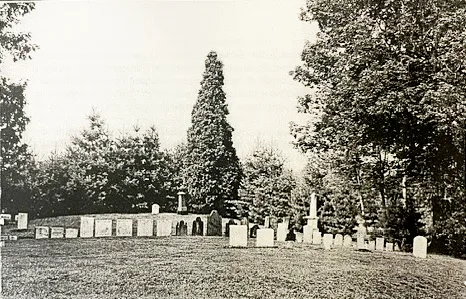
The McIntosh Cemetery, the first Scottish burial ground.
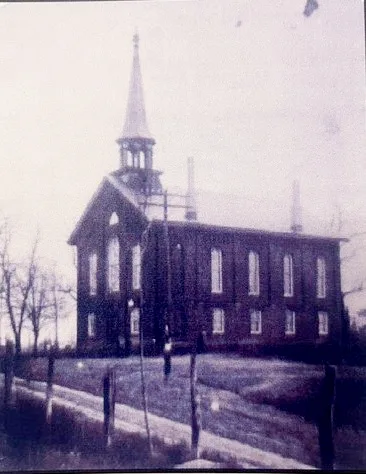
Yellow Creek Presbyterian Church (from James Woodrow’s “The Highlanders of the Old Scotch Settlement”)
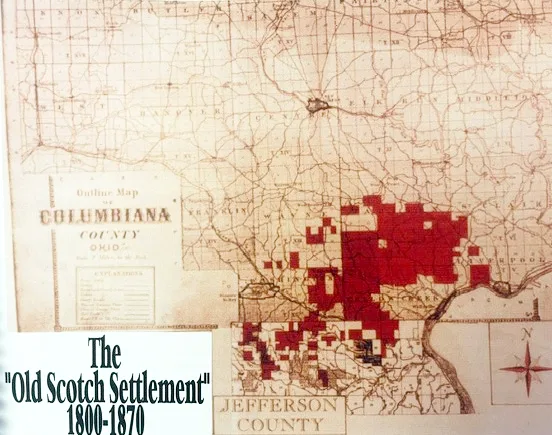
An undated map showing the Scotch Settlement in red.
The McIntosh Cemetery, the first Scottish burial ground.
Yellow Creek Presbyterian Church (from James Woodrow’s “The Highlanders of the Old Scotch Settlement”)
An undated map showing the Scotch Settlement in red.
Trending
The Scotch Settlement was founded about 1800 primarily in Madison and Yellow Creek townships. The settlement lacked "official" boundaries, but it was identified by properties owned by the emigrants from the Highlands of Scotland, many from Strathdearn and Strathnairn. The tract was approximately 10 miles by 3 to 5 miles, mostly in Madison township.
The village of Glasgow and Highlandtown Lake (in nearby Washington Township) are tributes to those early settlers.
Angus McBane is credited with founding the settlement with other early settlers including Andrew McPherson, Alexander McDonald, a Mr. Cook, Charles Rose, a Mr. Shaffer, James McIntosh, William Monroe and Evan McIntosh.
Columbiana County was one of the first areas settled in the Ohio frontier then known fancifully as The Indian Territory West of the Ohio River and the Scottish emigrants were among the first. It was said that the land was hilly and reminded them of their native land.
"They (early settlers) suffered many hardships. One large party was shipwrecked near Charleston, S.C., losing all they had. They crossed the Carolinas, and part of Virgina on foot, took a ship to Norfolk, sailed up the Chesapeake to Baltimore and crossed the country to Pittsburgh. The very infirm and the little ones in wagons and the rest of the party on foot. In that city many of them earned the money to buy the farms on which they afterward settled. How glad they were to breathe the free American air. And when in a few years they lived on land which they could call their own they felt that it was a good thing to get under the broad sheltering wing of the American eagle, no more to feel the pressure of the lion's paw, which they called 'the galling yoke.'" (from Long Run Literary Society, 1876, Margaret Keister and Lisabelle Leitch)
The "lion's paw" referred to the British need for soldiers for its war with France. Reportedly a man could buy himself off the draft twice but the third time he had to provide a substitute or go himself. Sailing ships were often searched by conscripting officers before departure for draft-eligible men who if found were forcibly taken off the ship.
Poverty and the Highland Clearances also contributed to tens of thousands of Scotsmen who left their native land seeking new lands and new opportunities. The Clearances (1750-1860) were the forced eviction of tenants across the Highlands and Scottish islands by landlords who wanted to replace traditional clan farming with more profitable commercial agriculture methods.
The early settlers wrote to friends and family back in the Highlands and encouraged them to join them in the settlement. Those letters were successful as the settlement grew. By 1820, the population was 583 residents of whom 305 were adults over 16 years of age. The population increased to 723 by 1830 and in 1840 it was more than 1,000. By that time the residents were first, second and third generation Scots.
Apparently, there was one emigrant, Mary Ann Smith, who returned to Scotland. It isn't known why she went back.
There were "American" families among the Scots in the settlement including Thomas Fawcett, founder of East Liverpool, and Noah Grant, grandfather of President Ulysses S. Grant. Also, in those early days of the settlement Native Americans were numerous and became friendly with the settlers.
The settlement grew and it eventually consisted of two gristmills, two blacksmith shops, a shoemaker, a post office, public scales and "hundreds of buildings."
The settlers were devout Presbyterians and services were held in cabins in the early days of the settlement. Some of those cabins were built of rough logs and had buckwheat straw roofs and were referred to as Buckwheat Meeting Houses. In 1825, the Yellow Creek Presbyterian Church was officially organized with the first brick church being built in 1827.
Roads in the area were not common as most travel was on horseback. The early settlers were farmers and spent their efforts clearing land and cultivating crops rather than constructing or maintaining roads. Horse paths were adequate to needs.
In addition to limited roads that kept the settlement apart, the fact that Gaelic was the language spoken by many of the residents created a linguistic barrier to integration. It was spoken in the home and church services were conducted in Gaelic. The Yellow Creek Presbyterian Church conducted services in Gaelic until the 1830s, thus keeping the settlement's church separate from the other Presbyterian churches in the region.
While the school taught in English, many youngsters from the settlement arrived at school speaking only Gaelic. An article in the Buckeye State, Aug. 17, 1916, reported that some school chums called it "some kind of gibberish." The article goes on to state that Scots claim their language is thousands of years older than English, is the best language to make a bargain in, to express friendship and for amorous pursuits. They further maintained it was spoken in the Garden of Eden.
For those who have attempted genealogical research of the settlement they will have encountered the challenge of many adults having the same name. According to Amanda Epperson's doctoral dissertation, "There were four Philip Smiths, seven Andrew Smiths, six Alexander McIntoshs and three William McIntoshs. To further complicate the matter, the wives of some of these men had the same given name. For example, two William McIntoshs had wives called Isabella. These men and others were even more difficult to identify and link when they resided in the same township."
The cholera epidemic of 1851 and the desire for land brought about the eventual disintegration of the settlement. The solution to the land problem was to not marry thus reducing subsequent generation numbers. The Civil War in 1861 saw many of the young men join the Union forces with a few dying in battle. Those who returned came back with a knowledge of the world outside the settlement. Also, marriages between settlement members and outsiders increased. And the last of the Highland pioneers had died.
Reminders of the Scotch Settlement can be found in Yellow Creek Presbyterian Church cemetery. The tombstones bear the names of Highland families who braved the dangers of the frontier for a better life in Columbiana County.
Editor's Note: The name Scotch Settlement can confuse linguists. The word "Scotch" is a noun meaning the malt whisky made in Scotland. "Scottish" or "Scots" is an adjustive meaning "of Scotland." The settlement referred to in this article has always been called the Scotch Settlement. And, to be transparent, Evan McIntosh, one of the early settlers, is the writer's great-great-grandfather.
This monthly column is provided by the Lisbon Historical Society. This submission was written by Gloria Tritten Mathews of the Lisbon Historical Society. Her email is hillcroft4@aol.com.