
ELHS students gain real-world insight into district leadership
Superintendent, school board member bring educational standards to life through interactive classroom experience
Trending
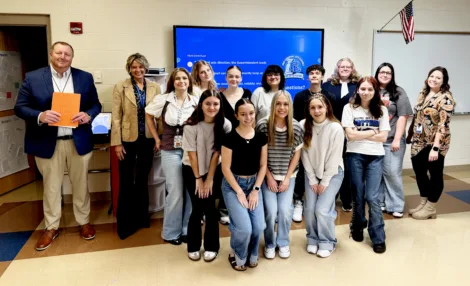
EAST LIVERPOOL -- Students in Audree Grimes' Early Childhood Education program at East Liverpool High School recently had the opportunity to take their learning beyond the textbook during an educational presentation and question-and-answer session with East Liverpool City Schools Superintendent Jonathan Ludwig and Board of Education Member Tamar Cooper.
The classroom visit provided students with firsthand insight into the organization, leadership, policies, and decision-making processes that shape public education while reinforcing the importance of student advocacy, community engagement, and professional collaboration.
The experience directly aligned with a component of the Early Childhood Education curriculum that focuses on understanding the structure of educational systems, the responsibilities of stakeholders, funding sources, educational policies, and the role of leadership in supporting student success.
A Superintendent's Perspective: The Future Educator's Playbook
Superintendent Ludwig presented "The Future Educator's Playbook," an interactive overview of the responsibilities, challenges, and opportunities associated with educational leadership.
Drawing upon his 28 years of experience in education, Ludwig shared his professional journey, which has included serving as an alternative education instructor, special education teacher, intervention specialist, special education coordinator, assistant principal, principal, educational consultant, and superintendent.
Students gained a behind-the-scenes perspective on what it takes to lead a school district serving approximately 1,900 students and 350 staff members.
His presentation highlighted the importance of establishing district goals, understanding Ohio's academic standards, analyzing school report card data, managing resources, supporting educators, and building meaningful relationships with families and community members.
Ludwig also explained how district leaders collaborate with the treasurer and Board of Education to establish priorities, address academic challenges, and ensure students have access to quality educational opportunities.
Students explored how classroom instruction connects to broader district initiatives, including academic achievement, attendance improvement, career readiness, and continuous school improvement.
Understanding the Board of Education: Leadership, Accountability, and Community Voice
Board of Education Member Tamar Cooper presented "Understanding the Board of Education," helping students recognize the important role locally elected school board members play in shaping educational opportunities.
Cooper explained that the Board of Education represents the community and is responsible for establishing district goals, adopting policies, approving budgets, and hiring and evaluating the superintendent and treasurer.
She emphasized that effective district leadership requires collaboration, transparency, accountability, and a shared commitment to students.
Students learned how the Board of Education, superintendent, and treasurer work together while maintaining distinct responsibilities.
The Board establishes the district's direction and expectations, the superintendent oversees daily educational operations, and the treasurer manages financial resources and provides guidance regarding the district's financial responsibilities.
Cooper also discussed the district's board committees, which provide oversight in areas including curriculum and technology, buildings and grounds, finance, athletics, and personnel.
Through practical examples, students explored how decisions involving preschool programming, staffing, classroom resources, and student support services move through the district's leadership structure.
Connecting Classroom Instruction to Districtwide Improvement
A significant component of the discussion focused on how classroom educators contribute to school improvement and districtwide decision-making.
Cooper introduced students to the collaborative leadership structures used throughout the district, including:
Teacher-Based Teams (TBTs): Educators collaborate to analyze student progress, develop instructional strategies, and identify students requiring additional academic support.
Building Leadership Teams (BLTs): Principals, teachers, and staff examine schoolwide data and coordinate improvement efforts.
District Leadership Teams (DLTs): District leaders review information and coordinate strategies to strengthen educational outcomes across the school system.
Using early literacy development as an example, Cooper demonstrated how teachers' classroom observations and instructional decisions can influence broader school and district improvement efforts.
The discussion reinforced an important lesson for aspiring educators: Teachers are not simply responsible for delivering instruction; they also play a critical role in shaping the educational systems that support student achievement.
Empowering the Next Generation of Educational Leaders
Throughout the experience, Ludwig and Cooper encouraged students to recognize the importance of their voices as future educators and community leaders.
Cooper challenged students to become informed advocates for children by asking questions, participating in community conversations, attending school board meetings, and sharing ideas that contribute to stronger educational opportunities.
She reminded students that meaningful leadership is not limited to those holding administrative or elected positions. Classroom teachers, support staff, families, and students all have opportunities to influence positive change.
One central question guided her message:
"How will this help every child learn, grow, and succeed?"
The question reinforced the importance of keeping students at the center of educational decisions.
Preparing Future Educators Through Authentic Learning
For Grimes' Early Childhood Education students, the visit provided a meaningful connection between academic standards and real-world professional practice.
Rather than simply studying educational systems through classroom materials, students had the opportunity to engage directly with district leaders, ask questions, and better understand the responsibilities associated with careers in education.
The experience also demonstrated the district's commitment to career exploration, workforce preparation, and providing students with opportunities to learn from professionals within their own community.