
Amateur radio station keeps Columbiana students connected
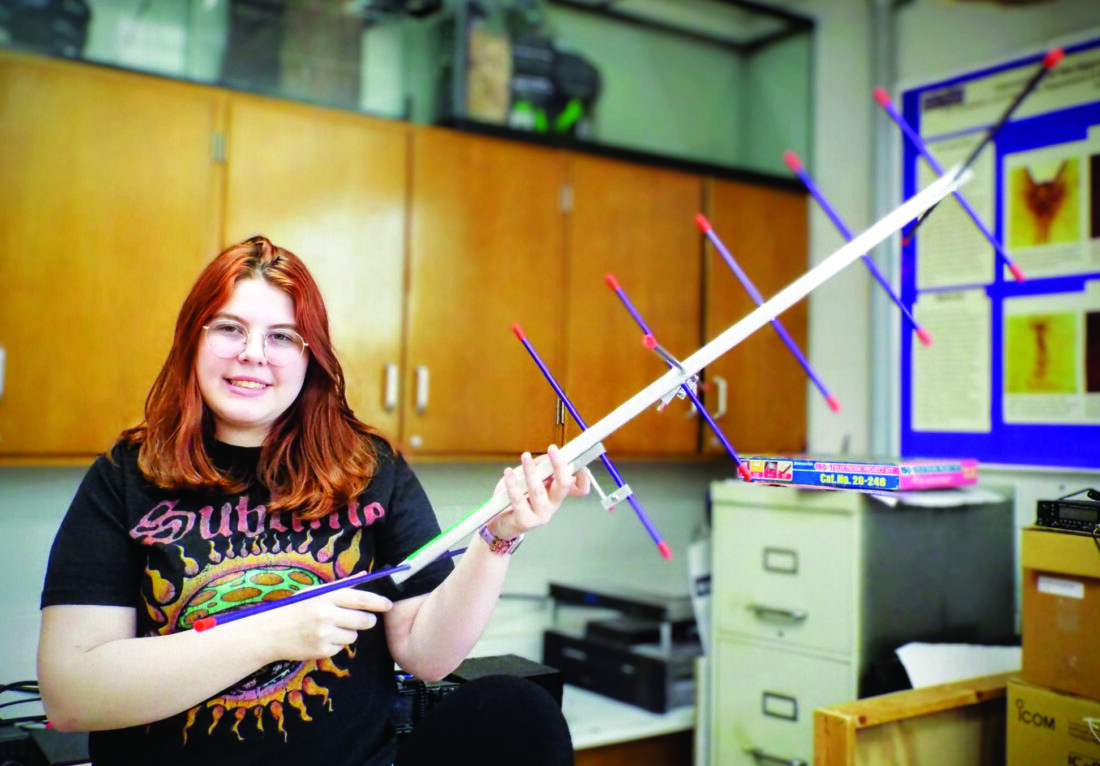
Columbiana High School junior and member of the district’s Amateur Radio Club, Savannah Howard (KB8VAQ) holds a fully assembled portable Arrow VHF-UHF handheld antenna used for field days. Used in conjunction with the club’s “go kit,” the antenna enables them to hold their own local “fox hunts,” where the operators use radio direction to locate a hidden low-power radio transmitter —especially since many of the club members are too young to drive. (Photo by Stephanie Ujhelyi)
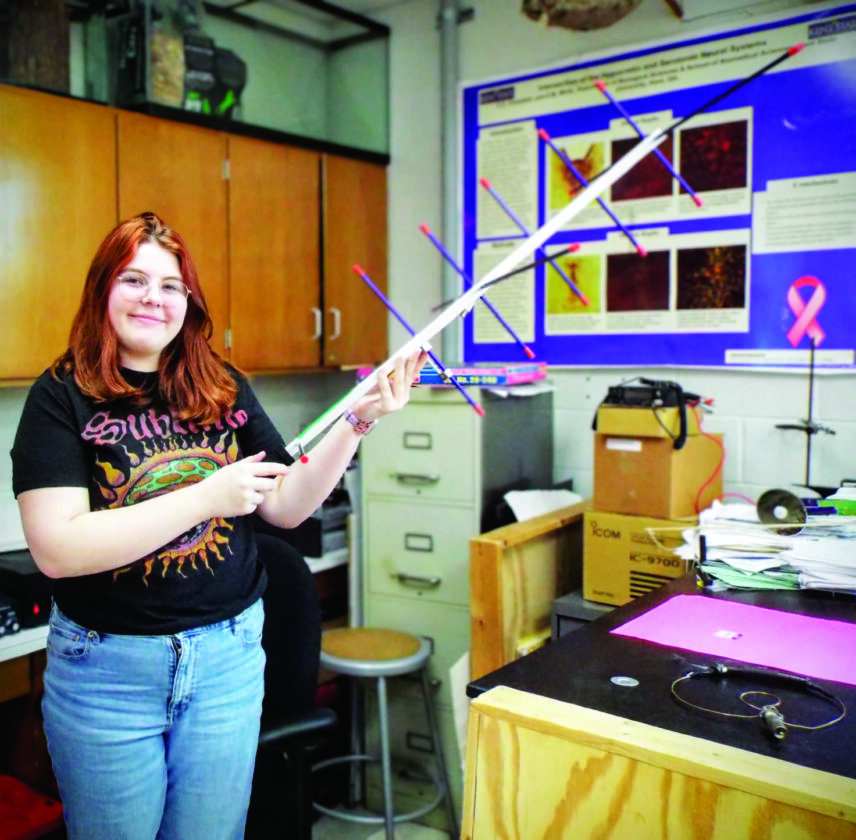
Columbiana High School junior and member of the district’s Amateur Radio Club, Savannah Howard (KB8VAQ) holds a fully assembled portable Arrow VHF-UHF handheld antenna used for field days. Used in conjunction with the club’s “go kit,” the antenna enables them to hold their own local “fox hunts,” where the operators use radio direction to locate a hidden low-power radio transmitter —especially since many of the club members are too young to drive. (Photo by Stephanie Ujhelyi)
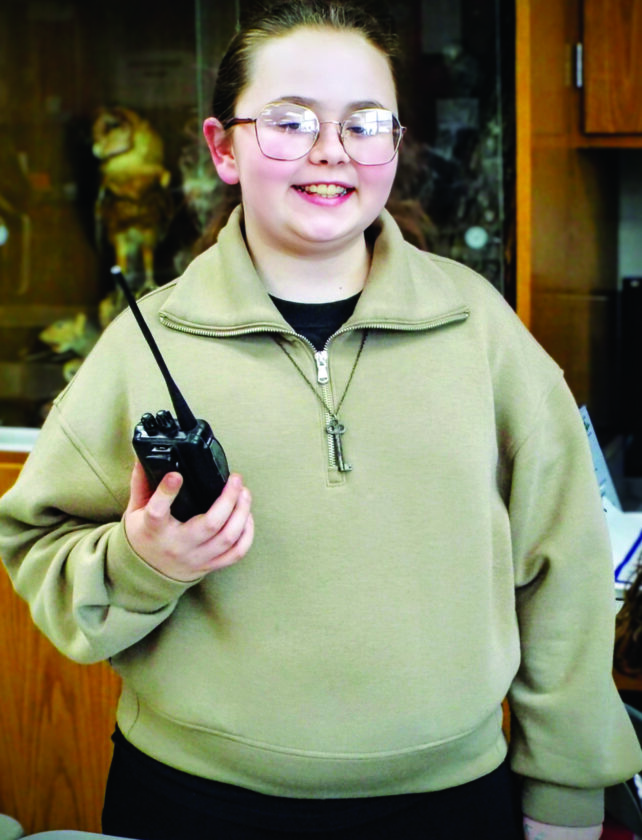
Columbiana Middle School fifth-grader Eve Campbell (KF8CAN), who is a member of the district’s Amateur Radio Club, holds a handheld AT transceiver radio, which is the equivalent as a high-brow walkie talkie and used often during their field days. (Photo by Stephanie Ujhelyi)
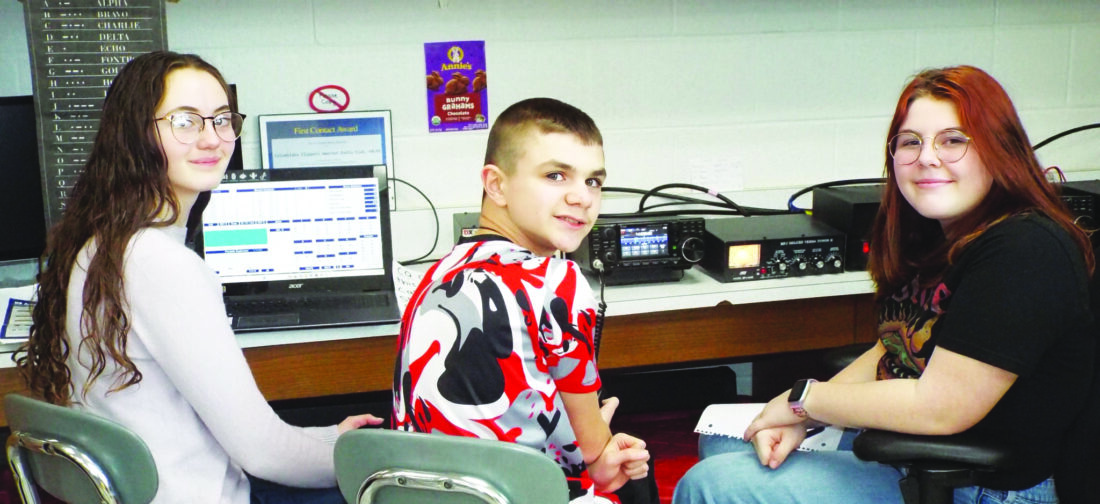
Columbiana Middle School students Elise Campbell (KE8TYU), grade 8; Josh Henderson, grade 7; and Savannah Howard, grade 11 participate Tuesday afternoon in the February American Radio Relay League (ARRL)’s School Club Roundup event. Columbiana has one of only a handful of school districts that have amateur radio clubs in Ohio. (Photo by Stephanie Ujhelyi)
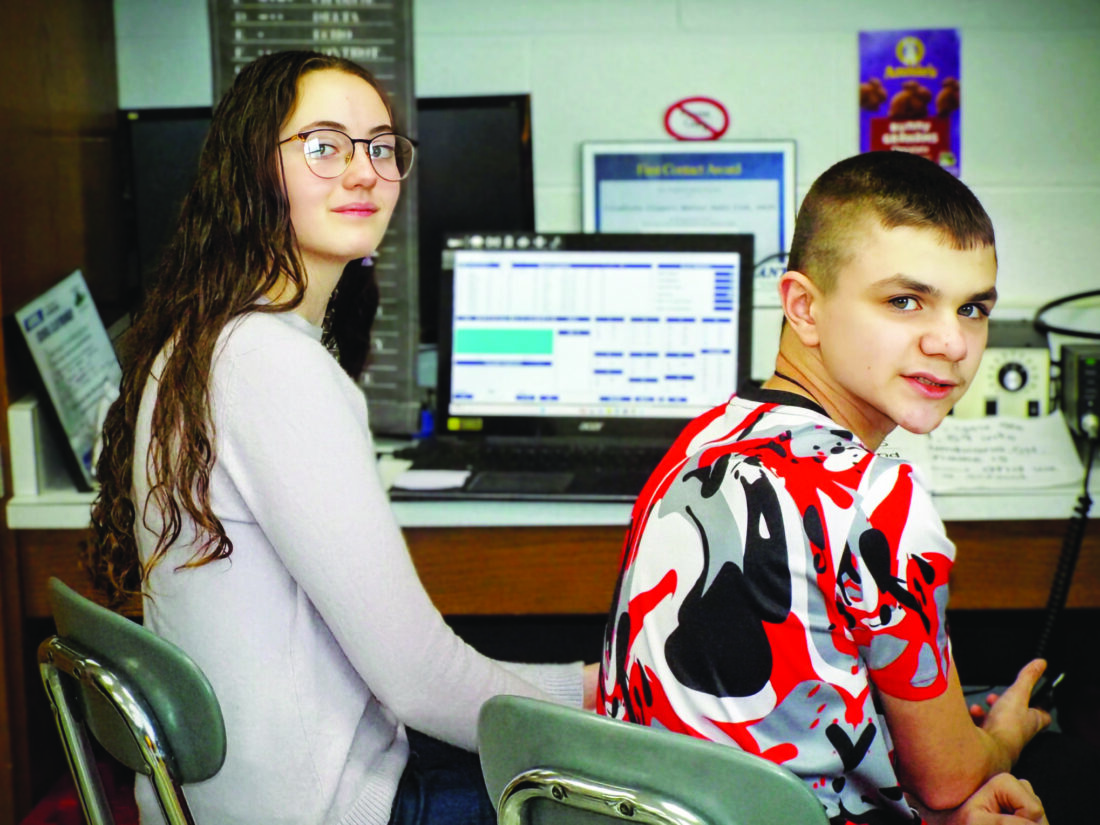
Columbiana Middle School students Elise Campbell (KE8TYU), grade 8, and Josh Henderson, grade 7, participate Tuesday afternoon in the February American Radio Relay League (ARRL)’s School Club Roundup event. Columbiana has one of only a handful of school districts that have amateur radio clubs in Ohio. (Photo by Stephanie Ujhelyi)
Columbiana High School junior and member of the district’s Amateur Radio Club, Savannah Howard (KB8VAQ) holds a fully assembled portable Arrow VHF-UHF handheld antenna used for field days. Used in conjunction with the club’s “go kit,” the antenna enables them to hold their own local “fox hunts,” where the operators use radio direction to locate a hidden low-power radio transmitter —especially since many of the club members are too young to drive. (Photo by Stephanie Ujhelyi)
Columbiana High School junior and member of the district’s Amateur Radio Club, Savannah Howard (KB8VAQ) holds a fully assembled portable Arrow VHF-UHF handheld antenna used for field days. Used in conjunction with the club’s “go kit,” the antenna enables them to hold their own local “fox hunts,” where the operators use radio direction to locate a hidden low-power radio transmitter —especially since many of the club members are too young to drive. (Photo by Stephanie Ujhelyi)
Columbiana Middle School fifth-grader Eve Campbell (KF8CAN), who is a member of the district’s Amateur Radio Club, holds a handheld AT transceiver radio, which is the equivalent as a high-brow walkie talkie and used often during their field days. (Photo by Stephanie Ujhelyi)
Columbiana Middle School students Elise Campbell (KE8TYU), grade 8; Josh Henderson, grade 7; and Savannah Howard, grade 11 participate Tuesday afternoon in the February American Radio Relay League (ARRL)’s School Club Roundup event. Columbiana has one of only a handful of school districts that have amateur radio clubs in Ohio. (Photo by Stephanie Ujhelyi)
Columbiana Middle School students Elise Campbell (KE8TYU), grade 8, and Josh Henderson, grade 7, participate Tuesday afternoon in the February American Radio Relay League (ARRL)’s School Club Roundup event. Columbiana has one of only a handful of school districts that have amateur radio clubs in Ohio. (Photo by Stephanie Ujhelyi)
Trending
Columbiana Clippers Amateur Radio at a glance
Call sign: KSLPS
Frequency of repeater: 444.7625 (to listen), 449.7625 (talk to repeater), PL code 162.2
All licensed amateurs welcome to use that repeater.
***
COLUMBIANA -- Columbiana is one of only a handful of Ohio school districts having an amateur radio station in the confines of its campus.
Nestled in the back of high school science teacher Colleen Campbell's classroom, amid taxidermy works and test tubes, is a surprisingly elaborate desk loaded with all sorts of amateur radio equipment like radios and repeaters -- as well as a computer where students track their communications with other radio operators around the globe.
Operating under the call sign KSLPS, the Columbiana Clippers Amateur Radio and Electronics Club began in November 2018, after the district's school resource officer Wade Boley demonstrated the electromagnetic spectrum to a middle school science class.
In 2025, Boley retired from the Columbiana police department; however, he continues to help Campbell in guidance of the club. She is equally as absorbed in the hobby along with her three daughters --all with their own call signs.
Boley stopped by Tuesday afternoon when the club had its American Radio Relay League (ARRL) School Club roundup. Held twice a year, once in February and again in October for five days, participating schools are permitted to operate their station for no more than six hours within a 24-hour period, or a total of 24 hours during the 107-hour event.
Students have specific criteria that they must observe during the event. Repeaters are not to used and only specific frequencies and bands are permitted.
They must track their contacts and submit them no later than 15 days after the end of the operating period, according to the ARRL website.
Throughout Tuesday the participating students made contacts with various national and international radio operators.
Thanks to contributions from groups like the Columbiana Community Foundation, DX Engineering and other radio enthusiasts, the district has been able to upgrade its equipment beyond normally what they would be able to obtain.
Campbell is especially proud of the number of middle and high school students, who have been able to obtain their own individual licenses through the program.
Last year, the club saw 10 of its members achieve that goal.
During one communication Tuesday, the students contacted "Mark from Wisconsin," who himself is in charge of education for his local club. Enthusiastic about speaking to youth, "Mark" talked about famous people with amateur radio credentials -- such as Joe Walsh of the Eagles and Priscilla Presley as well as several astronauts.
"It is a fantastic hobby," he added.
Campbell agreed, talking about the opportunities that her students get.
For example, fifth-grader Eve Campbell, one of Colleen's daughters, will be traveling to Orlando to an Amateur Radio conference in spring.
Colleen's oldest daughter, Katie, who won the Bill Pasternak WA6UTF Amateur Radio Newsline Young Ham of the Year award last year, currently is an exchange student in Germany --an opportunity largely garnered through her amateur radio hobby.
It is amazing to watch the older kids mentor the younger ones in the club, Campbell noted.
Recently the club showed off its "go-box," which is a portable, self-contained unit that houses a radio transceiver, battery and antenna system allowing the students to participate in field operations or emergency communications.
Normally the cases start around $750 for just the case to more than $2,800 for the complete systems in amateur radio circles.
The go-box allows the students many who are too young to drive to host their own field days locally instead of traveling to Lisbon or western Pennsylvania, where often these events are held, she explained.
Much of the club's equipment was donated by area amateur radio enthusiasts in an effort to advance the hobby among youth.
Campbell pointed out the school's amateur radio club isn't just limited to Columbiana middle and high schools. Students from homeschool settings or other districts who always share the fascination, also are welcome to join in the fun. After all, the hobby is one built on inclusivity and goodwill --a vision she and Boley share with the other operators.
One of the greatest advantages participating students gain from the club is the confidence in communication with other people with no fear.
They hope eventually to see the club expanded to an actual class, but Campbell acknowledges that they are just "gauging interest right now."