
Answering the call: Dispatchers are the unseen first line of communication in emergencies
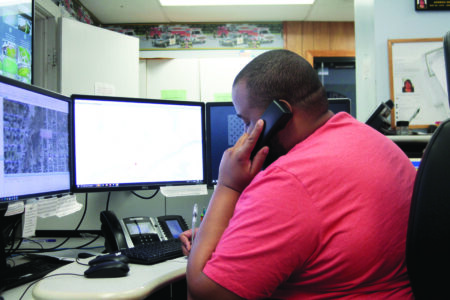
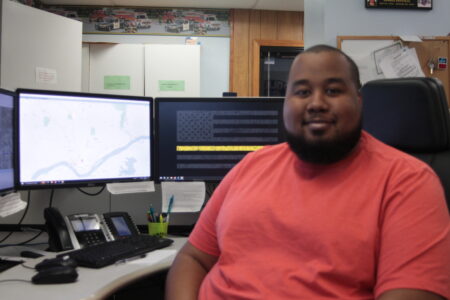
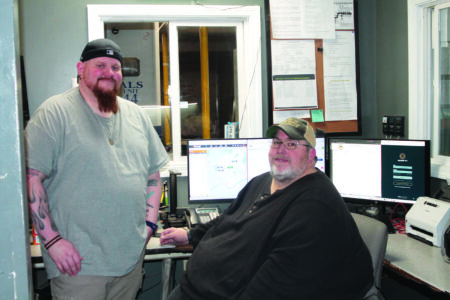
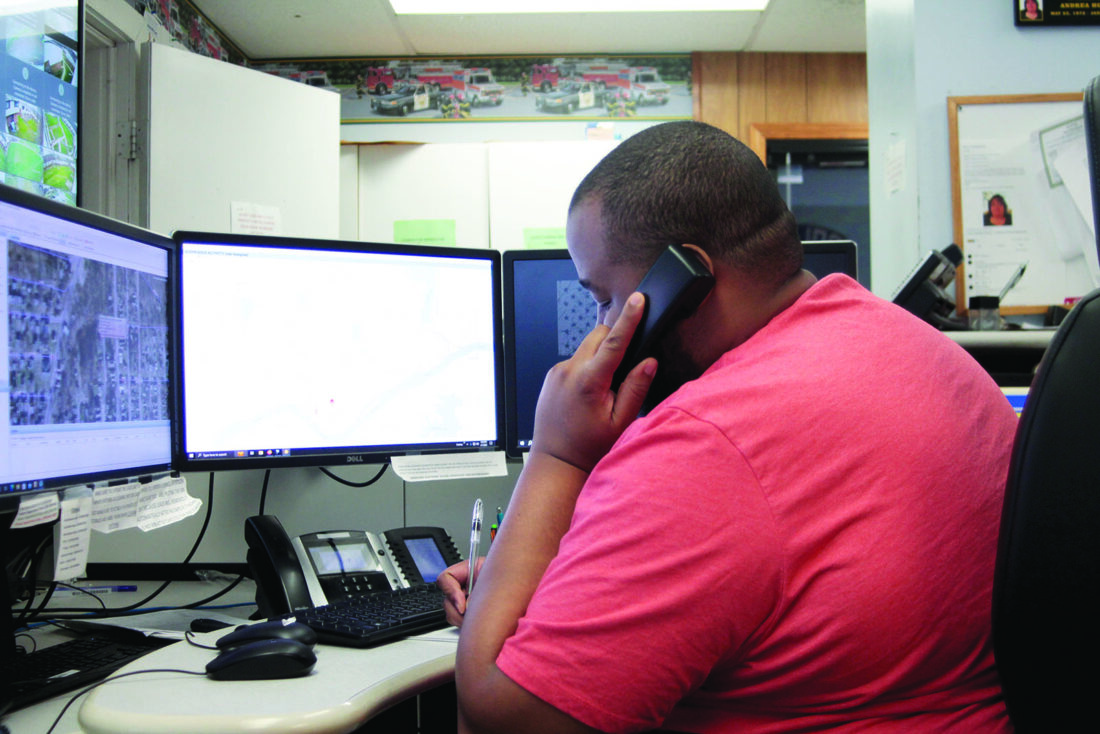
Emergency/911 dispatchers are the first line of communication when help is needed. They are the faceless calming voices on the other end of the phone gathering the information from those who need help to connect them with those who help.
Police, fire, paramedics — all first responders depend on dispatchers to quickly and accurately gather and relay all the needed information to the right emergency services so they can respond to the situation with the right personnel and right equipment to help.
“Dispatchers play a vital role in a first responder’s ability to handle their calls, whatever it may be, correctly,” East Liverpool Police Chief John Lane said. “A dispatcher’s ability to gather vital information and get it to the responding units in a timely manner is crucial and can literally be the difference between life and death.”
Aaron Beaumont, dispatcher for NorthStar Critical Care, who dispatches for ambulance and Glenmoor Volunteer Fire Department, sees dispatchers not only as the first line of communication for those in emergency situations but also as the first line of defense for first responders.
“Without us getting all the information properly, crews don’t know what they are walking into.” Beaumont said. “If we don’t do our jobs right it trickles down and no one else can do their jobs right. We have to make sure we are doing everything properly to make sure we get all the proper information for everyone out in the field, so everyone is safe.”
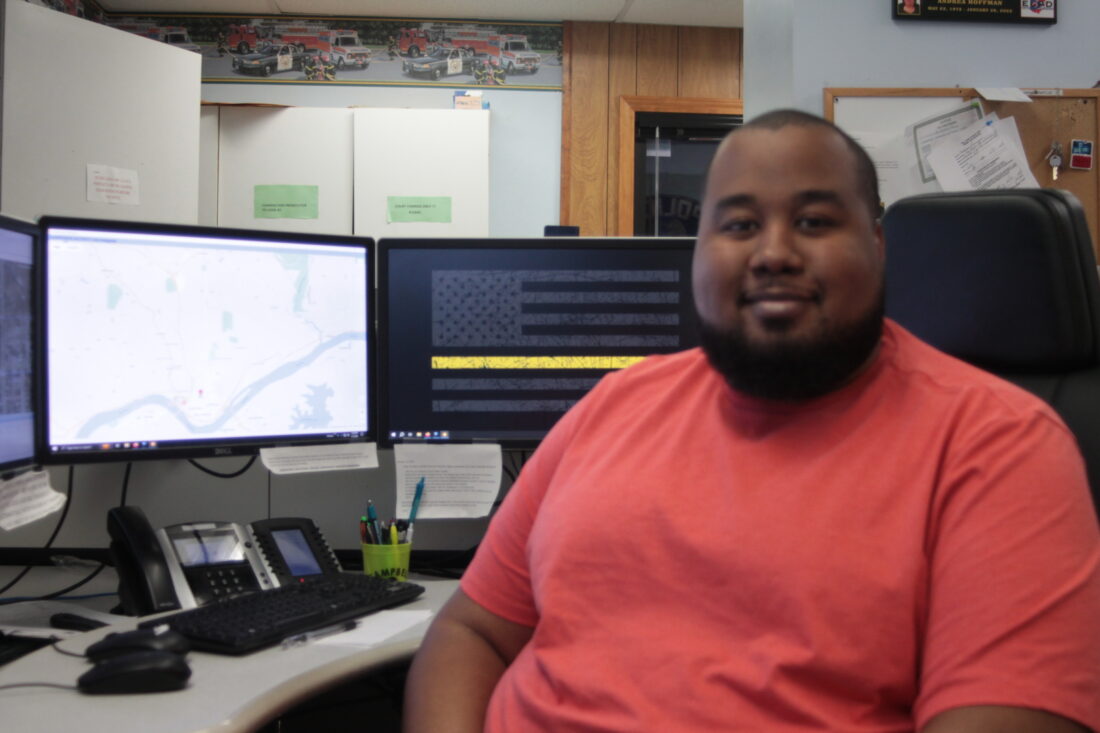
Rylan Childs, dispatcher for East Liverpool Police Department, said that dispatchers consider themselves first responders that don’t get the credit as first responders.
“You hear us, but don’t see us. You call us if you need us, but we don’t respond (to the scene). But without a dispatcher you’re not going to get the proper resources you need,” Childs said.
Dispatchers do more than just answer the phone.
Max Linville, dispatcher for NorthStar Critical Care, said as a dispatcher he is responsible for all radio traffic, contacting the utilities companies if needed for the fire department when they are on scene, contacting Stat Medivac if a patient needs flown and coordinating a landing site along with getting all the patient information from the ambulance crews and making sure all the information is in for them to write their reports.
For Wellsville and the Wellsville Volunteer fire departments, the firefighters also double as dispatchers.
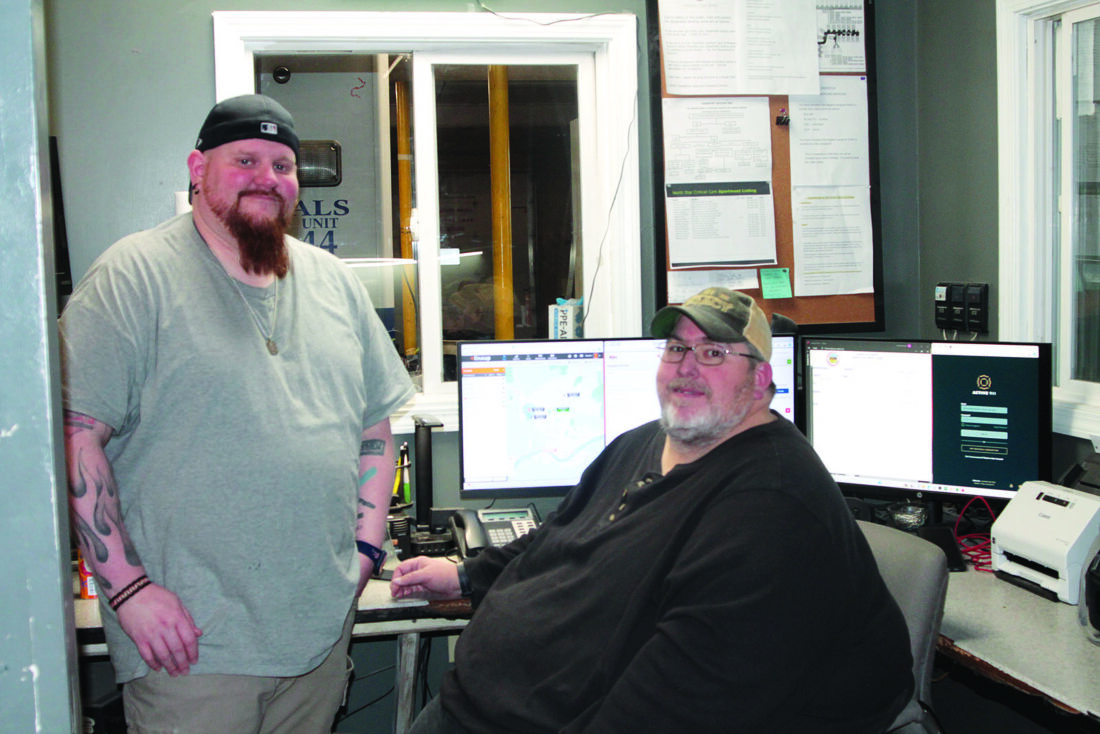
Fire Chief Jared Grimm, Wellsville Volunteer Fire Department, said the dispatchers there are responsible for all the police department units, making sure they are sent out to the right address for the right call, while getting descriptions of the how, what, when, where and who, checking up on the units when they are on a call, answering the phones, and during a severe weather event, such as the storms from the previous week, they are responsible for calling the Newcomerstown Locks and Dams and reporting the depth levels of the river near the flood gate.
Grimm also said that sometimes dispatch can be most important role in the fire department.
Childs, in addition to the previous mentioned responsibilities, noted that the dispatchers at the police department said it’s not just answering phones, but staying focused when your mind is going 100 miles an hour. The job involves being able to multi-task all while staying focused on the officers on the street, knowing which fire station is on duty and if they are responding to a call, if they are on the scene and who is on the scene. They are trained as 911 responders to provide medical guidance such as how to administer CPR, Narcan, an Epi-pen are medication the patient may have on and for a heart attack, until help arrives. The dispatchers log everything from what officer arrives on a scene to when they leave. If there are any resources officers or firefighters request such as additional tankers, they need to know who to call to get those resources to the scene. Dispatchers do safety checks on officers on a call every five minutes, except domestic situations or traffic stops, then do one every three minutes.
Childs noted that traffic stops and domestic violence situations have the highest probability for an officer to be hurt.
“More officers are injured or killed on traffic stops,” Childs said. “The most hair-raising thing you can hear on the radio is an officer yell for help or firefighter yell for help that they are either stuck in a building or has someone fighting them. It’s very scary to hear.”
Grimm described dispatching as nerve-wracking when dispatching officers because he doesn’t know the situation they are being dispatched into.
“Personally, I feel like I’m their first and last line of defense. If they are yelling on their radio for help, I have to be able to hear exactly what they need and if I don’t get them the right help they could maybe not come home, and that would be horrible, that would be unthinkable,” Grimm said. “People need to remember they are talking to another person. The person that is trying to help you has to get all the information. It’s a very important way to keep all parties safe.”
Grimm noted that as a dispatcher or a first responder the job gets much harder as the world changes.
For some, becoming a dispatcher was a calling; for others, the decision was based off a variety of different circumstances.
Beaumont has been a dispatcher with NorthStar since 2010. To him dispatching was the next step in emergency services after serving as a firefighter and then as an EMT. Dispatch was pretty much the only part of emergency services he hadn’t worked in and after working as an EMT in a casino he wanted something different, so he turned to dispatching.
Linville, first job right out of high school in 1994 was as a dispatcher. He also served as a volunteer fire fighter and on an ambulance, before joining NorthStar as a dispatcher in 2009.
“It’s just a continuation of the same,” Linville said. “If you’re involved in emergency services you tend to stay in it.”
For Childs, who grew up in the police station because of his mother Stephanie Kimber, administrative assistant, worked there for 25 years, the decision was simple as needing a career change. He had previously worked in the fast food industry. The same day he made the decision to quit his job he found out the police department had an opening for a dispatcher and less than a week later was filling the position.
For Linville, being a dispatcher is not only about service to his community. It also provides him with a fulfillment of what he considers having the best job where he’s not complacent and gets to work with people he has known for years.
For Childs being a dispatcher is rewarding through the service he provides to the community.
“I love being able to help out the community,” Childs said. There is nothing more rewarding than to know you give someone your all, sitting behind a desk helping the community with police, fire and ambulance. I try to make sure they have the best possible outcome regarding their situation. Whether it’s good or bad I try to make sure I do my job correctly to make sure they have the response they need.”
When asked about their most memorable calls, Linville pointed out that it was not just people that first responders help when he shared the story of the time, he had to dispatch the fire department with the jaws of life to free a cow that had gotten stuck in a tree. The cow had stuck its head through a part of the tree that formed a vee to eat grass on the other side and somehow fell and got stuck. Firefighters were dispatched with the jaws of life and a chain saw to free the cow and get it standing back up.
Grimm said he remembers all the calls he has taken. He noted that there have been a couple of times that he was able to walk away from a call knowing he had made a difference, but most of the calls end with a different outcome than what was hoped for.
“I shouldn’t say most. It depends on what type of call it is,” Grimms said. There are good things that can come from a bad call, and you can get surprised thy the good and that’s a good feeling.”
Childs had two memorable calls. The first one was the first call he listened to on his first day of training. The call was taken by retired dispatcher Pat Scafide and involved a child choking on a bottle cap. As he listened and learned what to say and what not say and what to do, he also learned what do you in those few seconds on a call matters. Childs noted the child survived.
Last year as Childs was working the midnight shift, when his shift was about over, he took a heart-wrenching call. He recalled it was 7:10 am.., and only 20 minutes left on his shift, when he got a call from a distraught mother who woke to find her toddler had passed.
Childs said that call was difficult because you never want to hear that happen, but while on that call he directed the mother through CPR and other things to try to help the child in case there was a chance.
“Unfortunately, the child was deceased. The difficult portion of this job is you do see that,” Childs said. “With that call it was difficult for me to hang up the phone. I had a hard time hanging up the phone because I wanted to listen to see if the EMTs made progress and if there was any chance that child might live.”
His shift ended after that call and he went home, but he could not sleep. Childs said he just sat on his couch. Returning to work the next day and being told he did all he could do helped him.
“You can only do so much from this phone, and as bad as you want to jump through the phone to assist, you can’t,” Childs said. “But, knowing that I did all I could to assist helped me get through it.”
Childs would like people to understand that the dispatcher is simply doing their job while they work to get help to them as quickly as possible.
“We can’t have them there at the snap of a finger. I know it might be the worst day of their life, but we are doing everything we can to get help to you so you can receive the care that you need,” Childs said. “That is why they say we are the calm voice in the dark. You never see us, but you always hear us. We are here to help and give people what they need.”
kgarabrandt@mojonews.com
Local News
East Liverpool CIC receives update on projects
EAST LIVERPOOL – The city’s community improvement corporation (CIC) met Thursday afternoon. President Scott ...
ELHS students recognized for creation of marketing video
EAST LIVERPOOL — East Liverpool City Schools Superintendent Jonathan Ludwig recognized students Jude Brown, ...
Perry Township trustees working to replenish salt
PERRY TOWNSHIP — Perry Township is taking steps to replenish its salt stores. During the board of trustees ...
Mahoning County engineer talks sales tax renewal at Goshen Township meeting
GOSHEN TOWNSHIP — Mahoning County Engineer Pat Ginnetti discussed the pending renewal of the county’s 0.25% ...
East Liverpool takes delivery of first new garbage truck
Salem council approves legislation
SALEM — City council approved several pieces of legislation in a special meeting Tuesday. The city council ...