
Salem child thrives after liver transplant
Trending
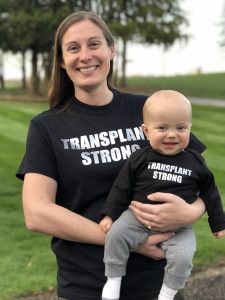
SALEM -- Levi Blasiman turns one year old today, but this birthday is all the more joyous for his family. Levi recently underwent a liver transplant and the donor was none other than his own aunt. As it turns out, giving is somewhat of a family trait. Levi's father donated bone marrow to his own brother 25 years ago.
"We named him Levi Blasiman because 25 years ago and a week apart, this is me, in the Morning Journal, and this is my brother Levi Blasiman," Levi's father Luke Blasiman said as he pulled out an old newspaper clipping from 1997. "He passed away a year later from leukemia. [The bone marrow transplant] was on his birthday. It was Feb. 26 in 1997 and my son Levi's was March 2 this year so it was 25 years and five days apart. So we named him Levi Blasiman in honor of my brother."
After baby Levi's birth, Luke said the family was jubilant and glad to carry on his brother's name. However, soon, joy gave way to concern. The second day of his life, Luke said Levi ended up spending some time in the NICU at Boardman Mercy Health hospital. "Akron Children's has a NICU inside of there," Luke said. "So they had some low sugar and stuff and we ended up being there for like a month, just for low sugar and he couldn't eat really well. Then we came home and everything was fine."
Luke said Levi wasn't gaining a lot of weight when he said Levi's pediatrician made an important call. "He was kind of small. We went to a regular pediatrician checkup, Dr. Marhefka in Salem, and we credit her for basically saving his life," Luke said.
The pediatrician thought Levi looked a bit jaundiced. "She thought that he looked a little bit yellow, which nobody else did, and she told us to go to Salem and get some bloodwork done," Luke said. "We got the bloodwork done and then she called us like an hour later and said, you need to go to Akron Children's right now. We went to Akron Children's that night."
After a week there and numerous tests, Levi's family learned he had not one but two liver issues. "They found out he had biliary atresia and Alpha-1 antitrypsin deficiency."
Levi's aunt Rachael Blasiman said she remembered them saying biliary atresia is pretty rare. "But having them both together, they say, probably a few people on the planet," she said.
Luke said Akron Children's had never had a baby who had both at the same time. "So when we went to Cleveland for the transplant, Dr. Radhakrishnan, who is their head G.I. doctor up there, said Cleveland's never had a patient who had both at the same time," Luke said. "He told us the chances of Levi being born with both at the same time was like one in 425 million. They said he could possibly be the only baby in the United States right now that has, and they both affect your liver."
Doctors were able to perform a procedure to try and help Levi feel better. "They did something called a Kasai Procedure which is basically taking his small intestine and attaching it to his liver because biliary atresia is where the liver never formed bile ducts to drain the bile out so that's why the little bit of yellow is there," Luke said and added that the pediatrician they saw first had caught Levi's condition just in time. "Biliary atresia is super time sensitive," Luke said. "The faster you can do a Kasai, the success rate goes from like 30 to 90 percent. [Dr. Marhefka] was a main attributor to saving his life eventually. If she wouldn't have caught it, we didn't have another appointment for a month."
Luke said after the Kasai surgery in June, it was a waiting game for the rest of the summer. He said Levi didn't get worse but he didn't get better either or gain any weight. "Then we were at Akron Children's multiple times for infections and he got really bad ascites, fluid in his belly," Luke said. "Then, the last time we were in there, Rachael called me and said that she was a match."
Luke said that about 75 percent of kids who have a Kasai procedure still need a transplant within two years. "But there is a small percentage that can go like five, ten, 15 years without needing it," he said. "We were still hoping we wouldn't have to go liver transplant, like a small hope, but they told us, it's probably going to happen."
"We started talking about it in October," Rachael said, which is when the idea of a transplant started to seem more real.
"So a Kasai is like a Band-Aid. In October we were watching all the blood counts closely and the one time his INR got really really high, which is basically your liver, how well your liver is doing," Luke said. "So we rushed to Akron Children's that night. He had a bunch of fluid and they said they wanted us to go to Cleveland the next week to start the liver transplant process. He got evaluated first, got all the stuff done. There's a million tests to do. Then they put him on the national transplant list. He was on the lower end because he wasn't really bad yet. At that time they started calling to see family members that wanted to donate."
Rachael said she ended up being the closest match, which was partly realized because of a DNA test she happened to do for her 30th birthday. "They tested my sister and she and I are matches, but she's got a gene that I don't have," Rachael said. "It cut her out of the running. I had gotten my DNA tested as a birthday gift to myself when I turned 30 so I knew I didn't have that gene."
Luke said the doctors did not want to test Rachael at first. "After they tested my sister Sarah, they said I was too tall. Apparently if you're tall, your liver is bigger. They didn't want to test me. They tested Sarah because she's really petite. I talked about my sister Rachael and they said they didn't want to test her." He said Rachael called him and said she didn't have that same gene. "So I called Cleveland," he said. "I said, hey can you do at least just like the initial test on Rachael to see maybe. I think they just did it to be nice, basically, to do it, and they did it and they called."
Rachael went up in January for all the initial blood tests and those came back good, she said. "Then I had to go back up for additional tests, the MRI and EKG, the EEG, more blood tests, lots and lots of tests," she said. "They were actually in the hospital when I got word that everything had come back looking good and we were going to move forward. The board had approved it."
Luke said that had been the worst hospital stay they had had at that point. "He had such bad ascites in his stomach where it's like your fluid just builds up," he said. "They have a hard time breathing. They usually give you [medications] and can get it to go down but they couldn't get it to go down. We didn't know what to do."
Luke said they were at Akron Children's with an ill Levi when Cleveland called with the news about Rachael. "His main doctor, the liver transplant doctor, and they told me later after the fact they were getting nervous at this point that he was going down this road and we still didn't have a donor lined up," Luke said. "They say kids with biliary atresia who need a liver transplant, they do fine then all of a sudden, they nosedive, and they can't give any medicine to stop it. Then it's like you need a transplant right now.
Luke said it was all a lot to handle. "I remember with us naming him Levi after my brother Levi," he said. "My mom and dad came over after we came home from the hospital the first time, then everybody was overjoyed because we had the initial scare in the NICU. Then, we come home and everything is fine. Then they call and say we had to go to Akron. It's just a whirlwind. You don't know what's going on. Then they come out and say he might need a liver transplant and he's seven weeks old. It was a very emotional up and down."
Levi went home after Akron Children's but his numbers stayed bad, Luke said.
Rachael said the day before the transplant the four of them, including Levi's mom Natalie, headed to Cleveland Clinic together.
Luke said he would recommend Akron Children's and Cleveland Clinic both to anyone. "Dr. Radhakrishnan was our main doctor," Luke said. "I can't say enough. They're so busy up there. You can't even talk to them, they're so busy. The morning of Levi's transplant he came and found us in the waiting room just to see how we were doing. I've never met another man like him, so that made it nice."
After surgery, Rachael said her pain was well managed, but she did experience complications. "I was in the ICU for about a day and a half and then I was up on the main floor for the donors," Rachael said. "I was there for about five days I think. Then there were some complications and I was worried I was going to have to stay longer but then everything worked out miraculously."
During the surgery the doctors had put in a special line in an artery to keep track of Rachael's pulse, second by second. "When they took it out, it caused blood clots so they were very concerned," she said. "They had to put me on Heparin to get rid of it. They were worried it was going to move. Then the Heparin caused a side effect of a hematoma so then there was that. Those were the two main complications. But the Heparin worked. It dissolved the clot and it just disappeared. The head of vascular surgery came in and examined me like, we don't really have a precedent for this, this is not something that happens very often so I'm not sure what to do with you. I said okay. Luckily things worked out."
Rachael stayed calm throughout the ordeal, though. "It was weird because when I was in the hospital there, I just kind of gave over worrying about anything," she said. "Things would happen, I'd be like, all right. It didn't get to me while I was there. It was a weird experience. I'd never had surgery before and I didn't know what to expect going into it."
Luke said after surgery, seeing Levi in discomfort was difficult. "When he came out he was still under anesthesia and it was the saddest, he started waking up and he couldn't cry because he had his breathing tube in and all you heard was these little whimpers," he said. "I couldn't even be around most of the time because it was the most heartbreaking thing ever."
They only stayed in the hospital for ten days after Levi's transplant. "Which amazed me, after a ten-month-old baby has an open liver transplant and we go home in ten days," Luke said. "They took all his liver out and a piece of his main hepatic artery I think and they had to use a cadaver piece of artery for that. But they put 22 percent of Rachael's liver into him."
"You've got three lobes and the smallest one, they took the whole thing," Rachael said. "And then a bit of, they're kind of like roots, the bile ducts. They took some of that as well to hook into him."
Luke said doctors said the liver was a perfect fit. "They were a little nervous because they said with babies since he is so small, it's hard to get," he said. "They said I was too big. There's only one spot they can cut in. It needs to be the right person. I thought they could get an adult liver and cut it whatever size they needed it, but it doesn't work like that. Luke said if the piece is too big, it can be shaved, but that might make it less likely to work, and doctors were very happy they didn't have to do that.
The new liver was already functioning for Levi within a few hours, Luke said. "The numbers that we were watching, his bilirubin and stuff, all the numbers and his INR that we were watching, within like three days everything went straight to normal," he said. "Stuff that we were watching for ten months. On the third day, the second day they started going down, the third day, just like normal."
Since the surgery, Levi has been doing great, Luke said. "He's chubby, got a little belly on him now, chubby cheeks, trying to walk," he said. Levi only needs weekly bloodwork at this time, Luke said, and his numbers remain strong. He said he thinks Levi is on nine different medications now.
Rachael said Levi was actually sicker than anyone had realized before the transplant. "I remember you told me that they were surprised when they took his old liver out how bad it was," she said to Luke. "It was worse than they had guessed."
Levi is thriving, Luke said. "He's like a completely different baby now," he said. "It's like, that was just our normal before the transplant, that what we thought normal was, just normal Levi and now he's like a different baby. He smiles more and giggles all the time."
June 3 will mark the three-month point since the transplant which is a crucial milestone. "The first three months for him, he's the most at risk for rejection," Luke said. "The problem is he is on such high anti-rejection medication right now so his body will accept her liver which is doing fine. But if he were to get a common cold then they'd have to lower his immunosuppressants so he could fight the cold but then you risk his body rejecting the liver."
Rachael said when she goes in for her own three month checkup, she too will have likely reached her own milestone. "In three months, when I go back for my follow up, they'll do another CAT scan and my liver should be 100 percent regrown," she said.
Community support has been important to the Blasimans as they have gotten through the transplant process. Rachael is a professor at Kent State University and she said during the transplant, her colleagues and her students were supportive and wonderful. Both Luke and Rachael said the community in general was a source of support and they are incredibly grateful. "A lot of churches around here are praying for us, a lot of people just going out of their way to help us out with driving us to appointments, being there for us, food, everything," Rachael said.
According to the United Network for Organ Sharing, 106,108 people in the U.S. are waiting on transplants with 3,106 in Ohio and 131 in West Virginia. Seventeen people will die each day while awaiting a transplant, according to the Health Resources and Service Administration.
Luke said they got lucky. "We are super super fortunate that Rachael was a match because there are a lot of families with kids that are waiting for organs," Luke said. "Like in Levi's case, he was starting to go downhill. If Rachael wasn't a match, you are just waiting on the national registration list and you don't know if you're getting one or not, sitting there watching your child get sicker and sicker and you're just waiting."
Rachael and Luke both hope people hear Levi's story and register to be a donor. "There's a national bone marrow donor registry, Bethematch.org," Rachael said. "Also always make sure you have organ donor on your driver's license."
Rachael said she hopes she is Levi's favorite aunt after what they share. "It's weird when I look at him now, like inside is a little bit of me," she said. "Not in a way like my child is mine, but an actual part of me."
llehman@mojonews.com