
Trending
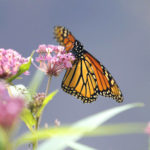
LISBON -- With its vibrant orange and black coloring, the monarch butterfly is perhaps the most well known of its kind, but its population could be on a decline unless more milkweed is available.
In a brilliant maneuver for its own survival, the monarch butterfly lays its eggs on certain types of milkweed plants. Once the egg hatches, the caterpillar eats the milkweed, ingesting the toxic compounds within the milkweed that are distasteful to many of its own predators. The compounds are not poisonous to the monarch, however.
This weekend began a statewide milkweed pod collection effort that is part of the Ohio Pollinator Habitat Initiative (OPHI) established in 2015 in cooperation with the Ohio Soil and Water Conservation District.
Locally, the Columbiana County Soil and Water Conservation District office. 1834 S. Lincoln Ave., Salem, is asking county residents to collect milkweed pods from established plants and drop them off between the hours at 7:30 a.m. and 4 p.m. Monday through Friday now through Oct. 30.
Jason Reynolds, wildlife and forestry specialist with the county SWCD, said the eastern monarch butterfly population has been on a decline across the entire United States.
He said the population has decreased by about 80 percent overall over the last 20 years as a result of not only less milkweed, but weather and habitat loss through timbering and the conversion of land for agricultural uses.
People not knowing what plants are weeds or not has also contributed, with people removing plant life that they think are weeds, but are actually important plants for pollinators like the monarch.
The monarch is important to have around for environmental reasons, since it pollinates several types of wildflower and is also an important food source for birds, small animals and other insects, according to the National Park Service.
"They are a great pollinator. All our pollinators are in a decline right now. That is the one that has taken one of the largest hits," Reynolds said of the monarch.
The butterfly is also a good pollinator source for different fruits and vegetables, he added.
Despite the overall decline, he has seen somewhat of an increase in the monarch population locally -- possibly as a result of the milkweed collection, which has been done this time of the year since 2015.
"This year I have seen a lot more monarchs than I have seen in previous years. Whether that is due to getting more habitat out there, or a combination of weather and habitat … I definitely think it is making a difference by leaving that habitat and planting pollinators like milkweed and others," he said.
He said those collecting milkweed pods in the county should pick them when the seed inside is brown, not white or cream colored. If the center seam of the pod pops with gentle pressure, it can be picked.
The SWCD also distributes pollinator packets to people interested in growing their own milkweed, he added.
"I have talked to a few folks that have taken our pollinator packets to grow. I was out at a few sites a few weeks ago and they have done quite well," he said.
One landowner in particular has a milkweed patch so large he has been able to release over 100 monarchs that have gone through the growth process after being hatched there, Reynolds said.
For more information, call the Salem office at 330-332-8732. Tips for milkweed planting can be found online at monarchjointventure.org.
More information about the OPHI can be found online at www.ophi.info.
kwhite@mojonews.com