
Trending
Online slot games use specific terms like Return to Player (RTP) and volatility to describe their risk profile and payout tendencies. These concepts play a crucial role in how players understand the odds and can help set realistic expectations. Exploring these terms gives insight into game design without guaranteeing individual results or predicting wins.
Slot games are not limited to reels and symbols; the language of odds and probability helps explain the structure and outcomes of each spin. Whether the aim is entertainment or pattern analysis, understanding RTP and volatility is relevant when evaluating games such as Joker Slots and considering different approaches to play. These terms often appear in game information pages across the online casino landscape, serving as reminders that practical knowledge frames expectations. By understanding what these metrics mean, it becomes possible to interpret game information more accurately and recognize the inherent uncertainties of digital slot gaming.
How Return to Player percentages inform choices
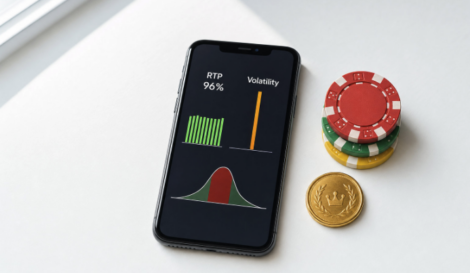
Return to Player is a percentage that represents the long-term average a slot machine is designed to pay back to players. For example, if a slot lists its RTP as 96 percent, it means that, over an extended period, the game is expected to return $96 for every $100 wagered. This is not a guaranteed result for every session.
It is important to understand that RTP is a statistical calculation based on many spins and outcomes. Short-term results can be substantially different from the published number, as wins and losses are distributed unevenly across individual sessions. This number provides context but not certainty in predicting potential results.
How game math and regulation shape RTP
Slot developers calculate RTP using mathematical models built into the game’s code, taking into account all possible outcomes. Independent testing labs may verify that the results align with the published figure, supporting fairness and compliance with applicable standards.
The published RTP can change based on regional regulations or operator settings. Some jurisdictions permit slots to offer different settings of RTP for the same game, resulting in variations between sites. Transparency around RTP varies, and disclosure practices can differ depending on where the game is offered.
Understanding volatility: win frequency and risk appetite
Volatility measures how often and how much a slot tends to pay out, assisting in identifying a game that fits a particular risk preference. Low volatility slots often deliver more frequent but smaller wins, while high volatility slots tend to award larger payouts but less often.
Players seeking a steady stream of smaller returns may prefer low volatility slots. In contrast, high volatility games can result in longer periods without wins but may offer much larger prizes when they occur. These characteristics can influence session length, bankroll swings, and overall slot experience.
Interpreting the interplay between key slot metrics
It is possible for two slots to feature the same Return to Player but present very different experiences due to volatility. A high volatility slot and a low volatility slot can share the same RTP, yet outcomes may vary dramatically from one play session to another.
There is sometimes confusion between hit frequency and RTP, with some believing that more frequent wins indicate better returns. In reality, hit frequency refers to how often a win occurs, while RTP reflects the total money returned over the long run. Understanding these distinctions helps avoid common misconceptions and interpret published slot metrics effectively.
Finding and reading slot information accurately
Details about RTP and volatility are often available on game information pages, rulebooks, or within an online slot’s help section. These sources may also reference additional terms such as hit frequency, maximum win, or bonus round features to describe overall game behavior.
Transparency around these numbers can vary. Established operators are more likely to publish detailed, standardized information, while some sites may provide only basic descriptions. Learning to interpret these figures enables more informed comparison of games and an understanding of the risks involved, but no metric can guarantee a result.
Understanding Return to Player and volatility allows for more informed identification of personal preferences and setting of realistic expectations. While these metrics inform decision-making, outcomes in slot games remain chance-based, and unpredictability is an inherent feature of the experience.